
I want to say something plainly, because not many people in this industry will.
We take as much pride in keeping a customer from paying for work they don't need as we do in helping the ones who do. Our reputation matters more to us than any single invoice. That's the rule we run this company by, and it costs us money on a regular basis.
Twice in recent weeks, it looked like this.
"Your whole garage ceiling has to come out"
A homeowner called us on a Monday evening. We were at her house the next morning.
Her week had started with something small. A running toilet. The plumber who came out to fix it noticed a lifted tile near the base and told her water had been getting into her floor. Within the hour, a drywall company the plumber worked with was at her door with an infrared camera.
What she was shown kept getting worse as they walked. Water under the toilet. Water in the garage beams below. Then, on the way back through the kitchen, the camera came up again and now it was the entire garage ceiling. The plan was to pull the bathroom tile, pull the ceiling, dry everything out, and bring in a restoration company afterward to put it all back. She was told it would get worse every time she flushed. She was pushed to call her insurance company right then and start the work before her carrier had confirmed there was any coverage.
She had lived in that house for ten years. No stains. No sagging. No smell. Nothing had ever suggested a leak.
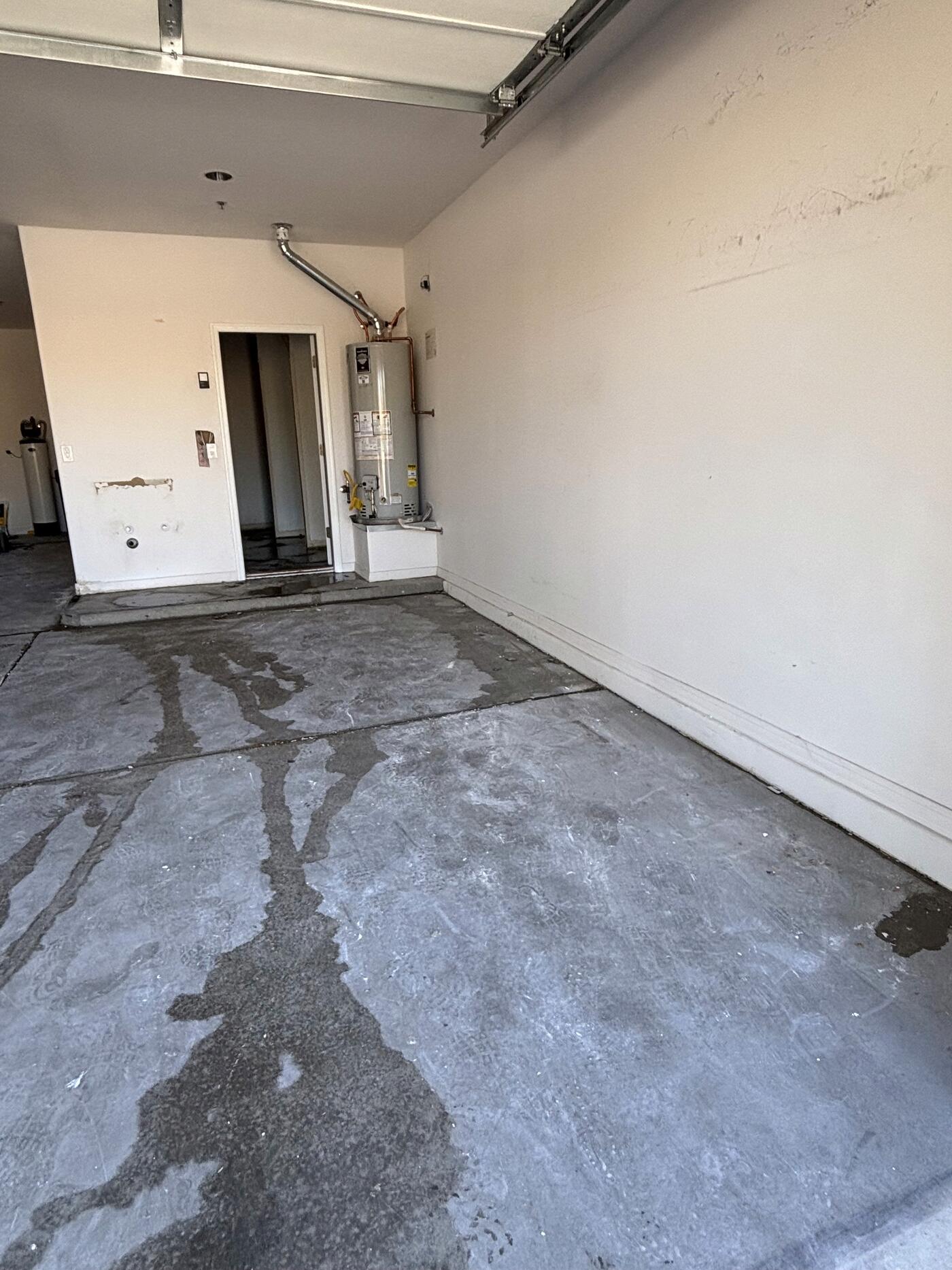
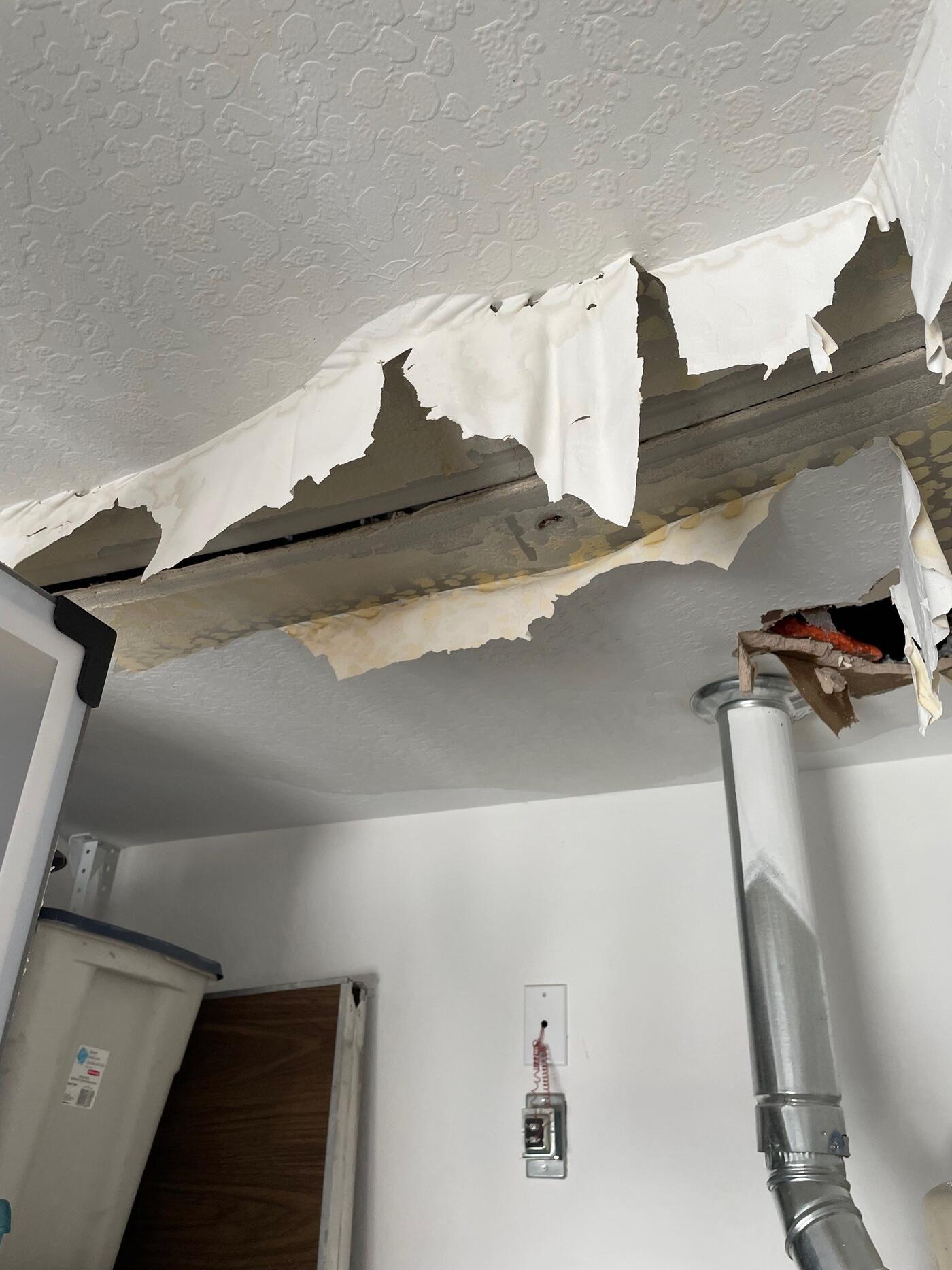
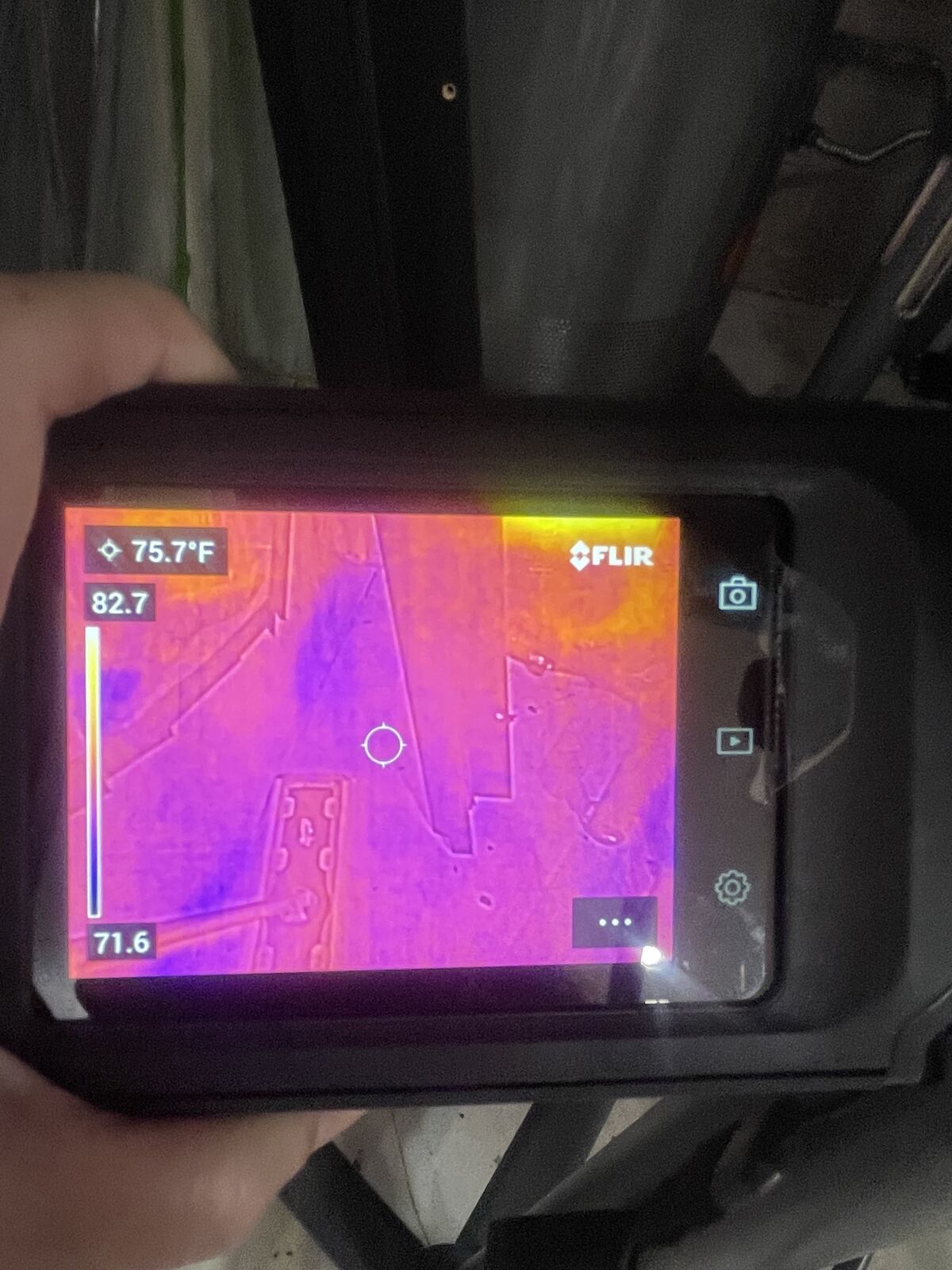
We inspected the same bathroom and the same garage ceiling and could not find moisture. Not in the floor, not in the beams, not in the ceiling. We walked her through the readings on our own equipment so she could see them for herself, and then we pulled up photos from real leak jobs so she could see what an actual bathroom-to-garage leak looks like. The staining. The discoloration. The kind of damage that announces itself long before anybody needs a camera to find it.
She didn't need us. That was the whole job, and we were glad to do it.
Alma came in and did the same thing this drywall company did with her infra detector and could not detect a single drop of water or leaking in my bathroom or in my garage ceiling. She showed me on her infra detector as well, and it showed no leaks. Can you imagine how relieved I was.
Read the full review on Google
A skylight, and one simple question
The second call was a lot calmer, but it comes from the same place.
A homeowner had a skylight that leaked at some point in the past and had since been re-caulked. The upper shaft still carried the old water stains. Then it rained, and she was stuck with a question you can't answer by looking at it. Is that stain old, or is it new?
She called in the morning and we were there in under two hours. We checked the stained areas two ways, first with infrared and then with a two-prong moisture probe driven directly into the material, and everything read completely dry. The caulking had held. What she was looking at was a scar, not a wound.
Fifteen minutes of work answered a question that would have nagged at her for a month. There was no invoice, and no reason for one.
After assessing the stained areas with both infrared technology and a two-prong moisture probe, she concluded that the stained areas were completely dry. Alma was both knowledgeable and likeable. I am grateful to have discovered her.
Read the full review on Google
Why a camera can find water that isn't there
This is the part homeowners are almost never told, and it explains most of what happened in that first story.
An infrared camera does not detect moisture. It detects surface temperature. Evaporating water reads as a cool spot, which is exactly why we use thermal imaging every day. But a stud behind drywall reads cool too. So does an air conditioning duct, an exterior wall sitting in shade, a recessed can light, insulation that has slumped, or a stretch of ceiling that simply hasn't warmed up yet. On a screen, in a dim garage, all of that looks the same. It looks like somebody found something.
So a thermal image is where an inspection starts. It is never where one ends. Anything the camera flags has to be confirmed with a moisture meter, either a pinless meter read against the surface or a two-prong probe pushed into the material to read the moisture content directly. That step is the difference between "there's a temperature difference here" and "there is water in this wood."
We're not telling you this to make anyone look bad. We're telling you because it's the most useful thing a homeowner can know, and because we would rather you be able to check our work than have to take our word for it.
What to ask before anyone opens a wall
If someone is standing in your house telling you that drywall has to come out, you're owed all of this first. That goes for us too.
Ask for a moisture meter reading, not just a thermal image. Get the actual number, and ask what a dry reading would be for that same material.
Ask where the water is coming from. Real damage has a source. A supply line, a drain, a roof penetration, a slab. "It's leaking somewhere" is not a source.
Ask why you haven't seen it. Ten years of an active leak under a toilet does not stay hidden. Staining, warping and odor show up long before a tear-out is warranted.
Ask who gets paid for the finding. If the company diagnosing the damage is also the company that gets paid to remove it, that doesn't automatically make them wrong. It does mean you're owed proof. We'd say the same about ourselves.
Ask for time to think. Real emergencies exist, and we run 24/7 because of them. But urgency is also the oldest pressure tactic there is, and a real loss will still be a real loss tomorrow morning.
Be careful about opening an insurance claim before you know. A filed water claim can land in CLUE, the shared claims history database, where it sits for seven years from the date of loss and is visible to any carrier you apply to. Claims that end in no payout because the damage fell inside your deductible generally shouldn't be recorded there, and simply asking a coverage question isn't supposed to be reported at all, though your own insurer may still make a note of the call. Find out whether you have damage before you open a claim over it.
Why we do it this way
We're a small company in a crowded market. We're up against businesses with decades of history and hundreds of reviews, and there's no shortcut around that. The one thing we can build faster than they can is a reputation for telling people the truth.
Our inspections are free. That's not a promotion, it's just how we think this ought to work. Sometimes the honest result of a free inspection is that we pack up the truck and leave without a job. That's fine by us. We'd much rather be the company you call the next time something actually goes wrong, and the one you name when a neighbor asks.
And when the water is real, you'll want to move fast. Mold can start developing in wet materials within 24 to 48 hours, which is why we answer the phone at any hour. Knowing which situation you're in is worth an hour of somebody's time.
We'll tell you either way.