
Some jobs make you slow down. This one did.
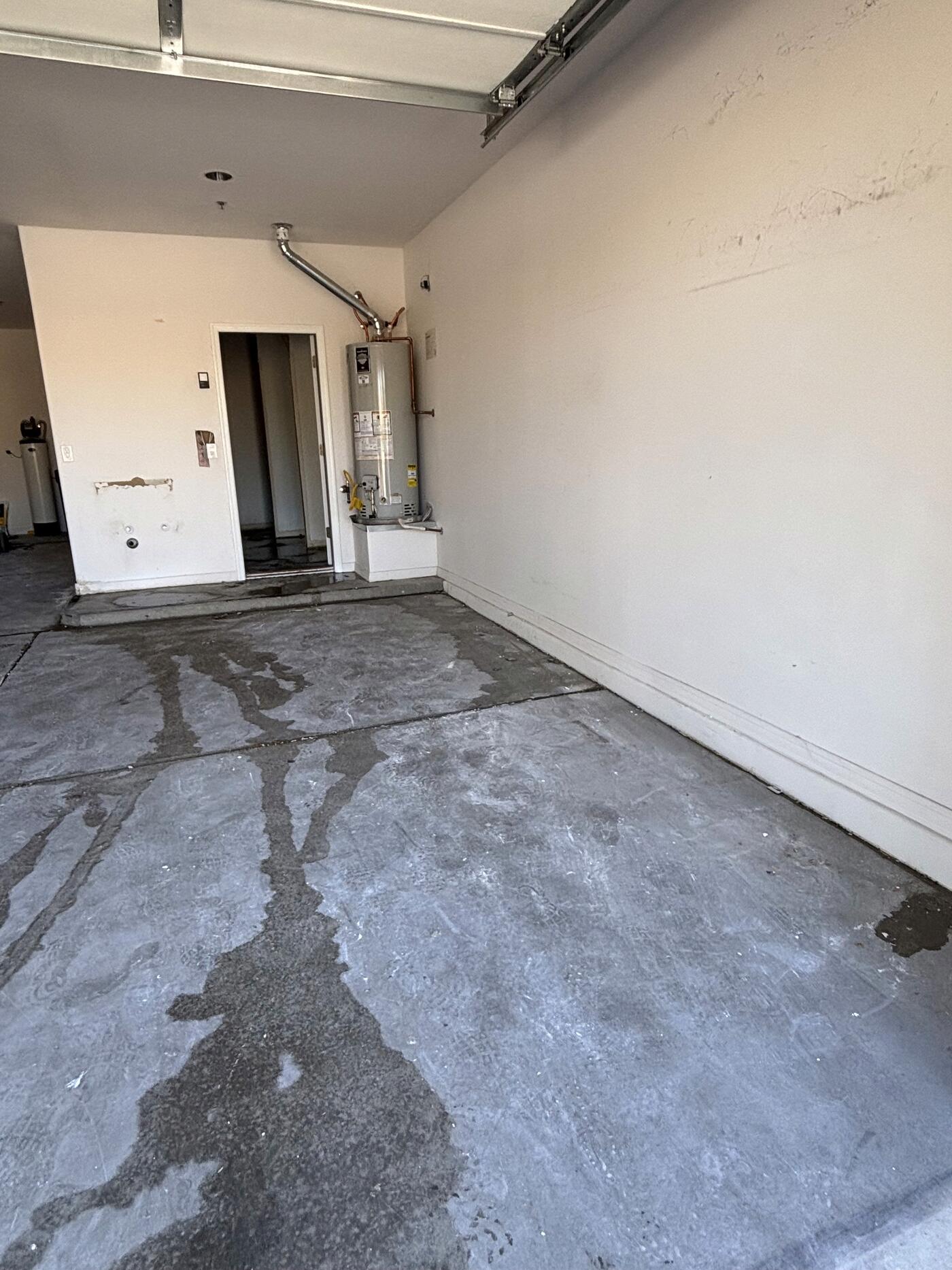
We were called to a Paradise Valley estate, a home somewhere north of five million dollars, built with the kind of materials you cannot pick up at the hardware store on the way over. A supply line behind the wet bar had failed. By the time anyone noticed, the water had crossed much of the main floor and soaked into surfaces that do not dry the way ordinary drywall does.
On a home like this, the easy money is in tearing out. Open every wall, haul it to the curb, bill the demolition, and let someone else worry about putting it back. We went the other direction everywhere the building would let us, and that is really what this story is about.
Why this house was hard
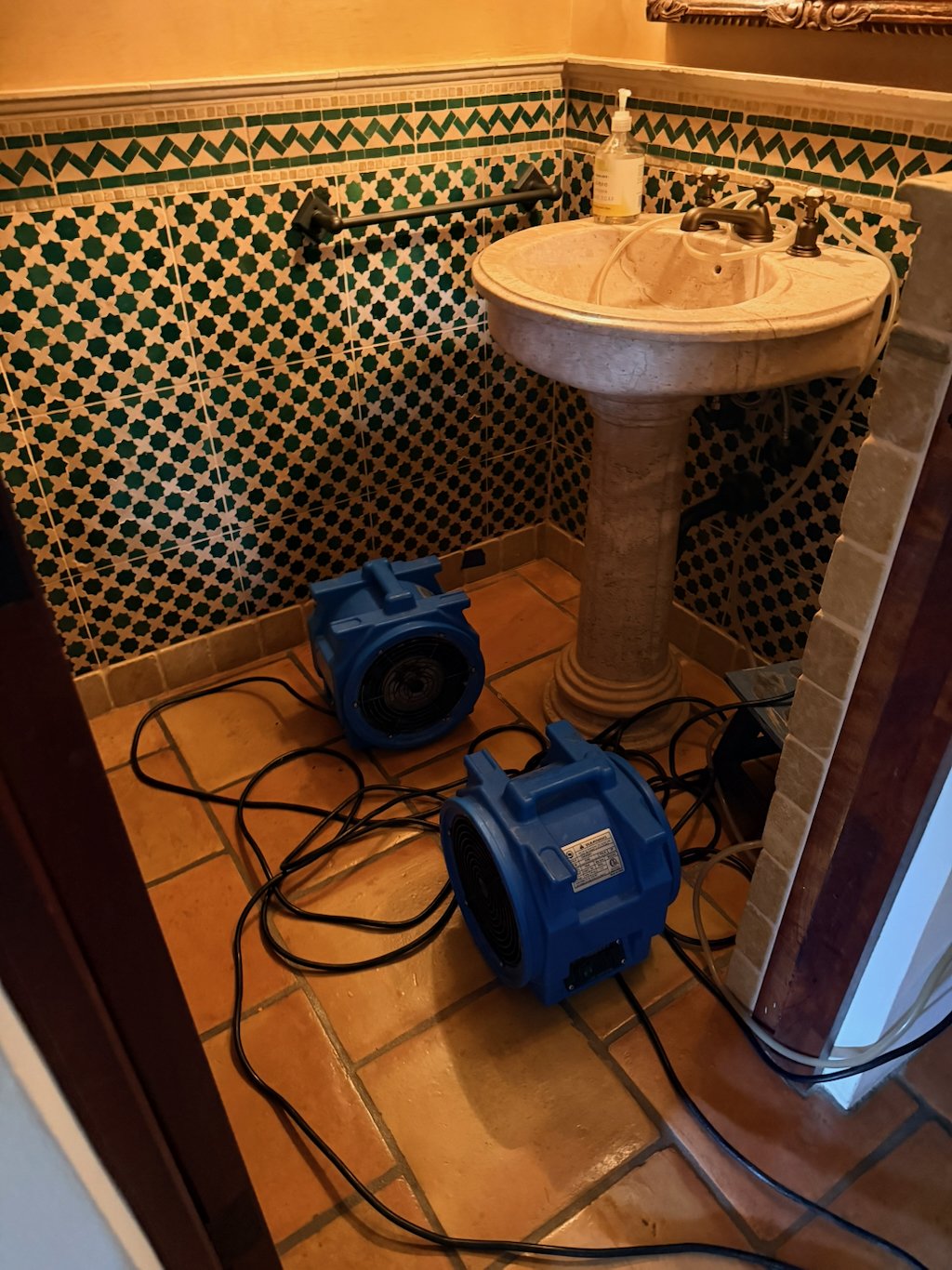
Most homes we dry are wood framing and paper-faced drywall. Soak that and we can usually pull it back to dry in a matter of days.
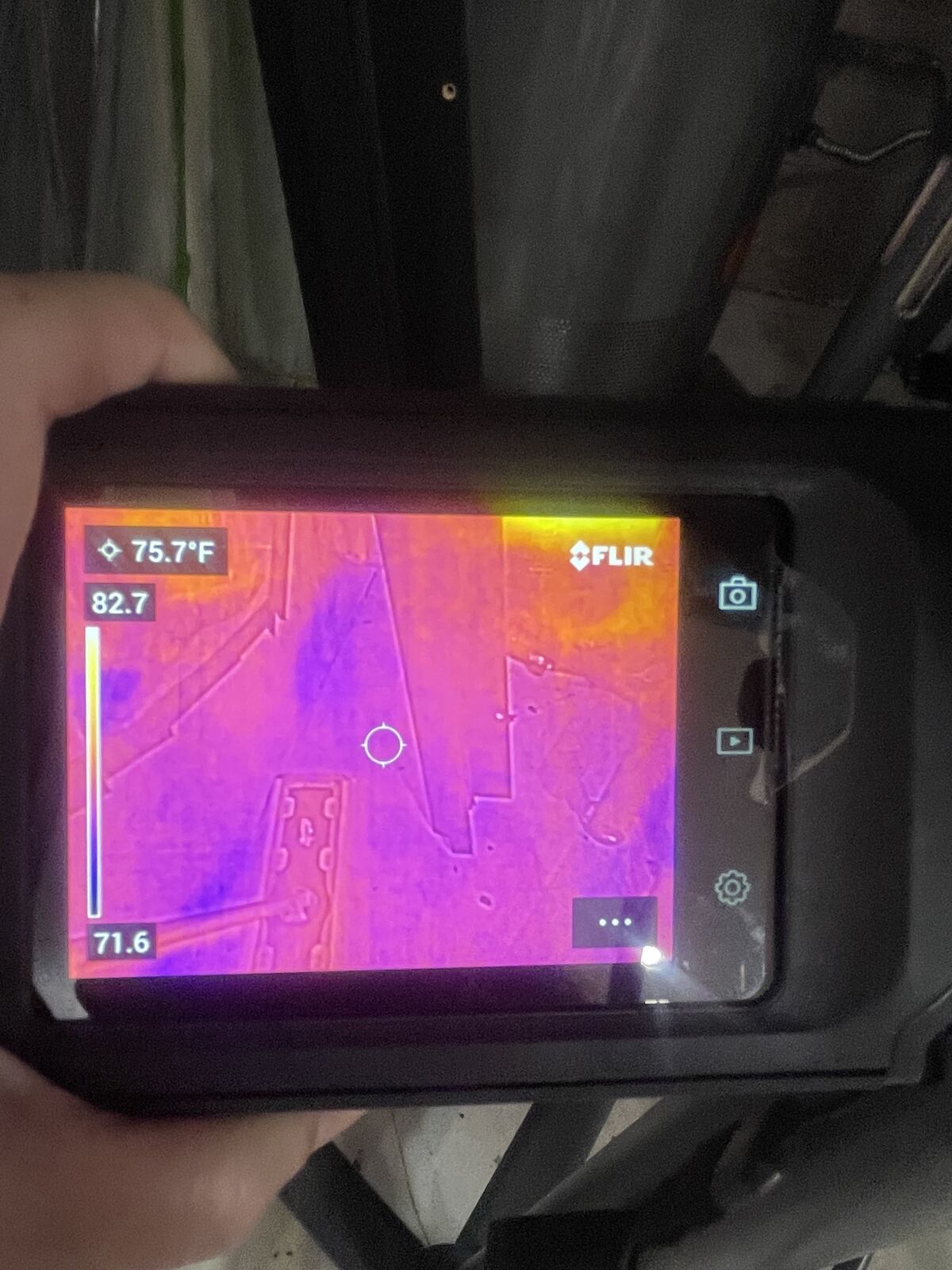
This was not that. The walls were concrete masonry with plaster and stucco finishes. The floors were Saltillo tile set over concrete. There was Venetian plaster, travertine, custom millwork. Dense masonry like this takes water in deep and lets it go slowly, which creates a real trap for anyone drying it. A concrete or plaster wall can read wet for weeks even while it is drying perfectly well. Read that number cold and you might decide nothing is working and start cutting. That is how irreplaceable finishes get destroyed for no reason at all.
So the whole job came down to one question we had to answer honestly every single day. Is this still drying, or is it as dry as it is going to get?
A simple test that told us the truth
Here is the tidbit I like most from this job, because it costs nothing and it works.
Because masonry holds its reading so long, a single moisture number does not tell you much on its own. So we stopped trusting single numbers. We would take our readings with the dehumidifiers running, then shut the dehumidifiers off and let the sealed room sit for thirty minutes or more, and then read again.
If the moisture in that closed-off air crept back up with the equipment off, the structure was still giving up water, which meant the drying was still doing something real. When the readings with the equipment off stopped climbing and started matching the readings with it on, we knew the masonry had given up all it was going to give. The house had reached its floor. No guessing, no cutting into a wall to find out. Just a half hour of patience and two sets of numbers.
Heat, and keeping it off the wood
Pulling water out of dense concrete faster means adding heat, because warmth speeds evaporation out of the material. The problem is that heat is exactly what you do not want sitting against the things that make a home like this worth what it is. The hardwood cabinetry. The furniture. The millwork.
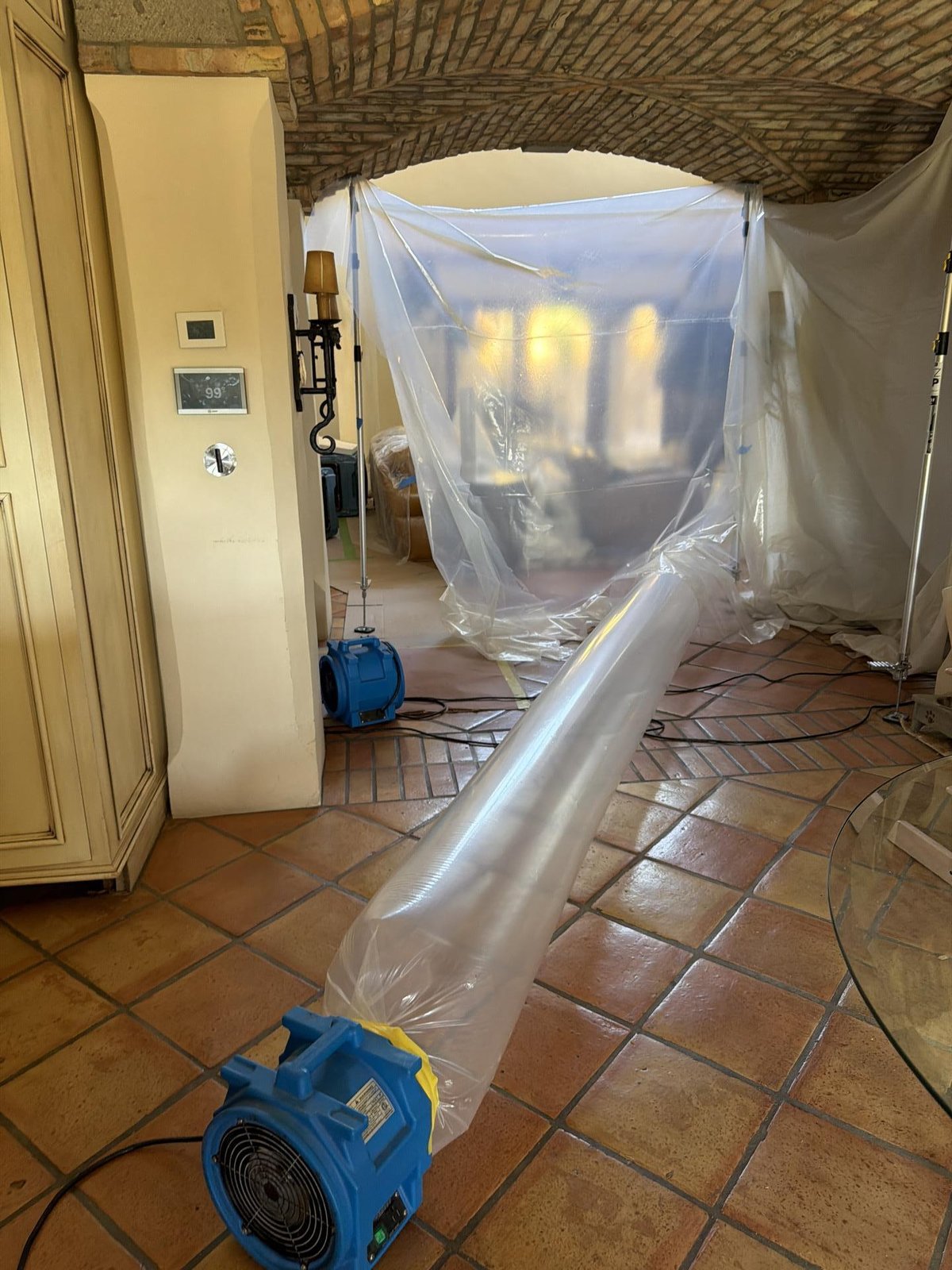
So we built controlled drying chambers. We sealed off the affected wall sections with poly, raised the temperature inside those chambers to work the masonry, and then set temperature controllers wired to purge fans so the chambers never ran hotter than we wanted. To move that hot air safely we ran lay-flat and runflat ducting, routing the heat up and out of the sensitive zones instead of letting it build against wood. Twice a day, every day, we put a thermometer on the actual surfaces, the cabinets and the furniture and the walls, to confirm nothing was getting close to harm. The concrete got the heat it needed. The finishes stayed cool and protected.
Preserving beats demolishing
Where we did have to open walls, we had good reason. Two concealed areas had sat wet long enough to grow microbial growth, so those got the full treatment, containment, negative air, HEPA vacuuming, and antimicrobial, handled as the most serious category of water because of how long it had gone undiscovered. Even there, we kept the demolition to carefully controlled cuts low on the wall so we could save the original wall tile above, which was the kind of material that is difficult or impossible to match.
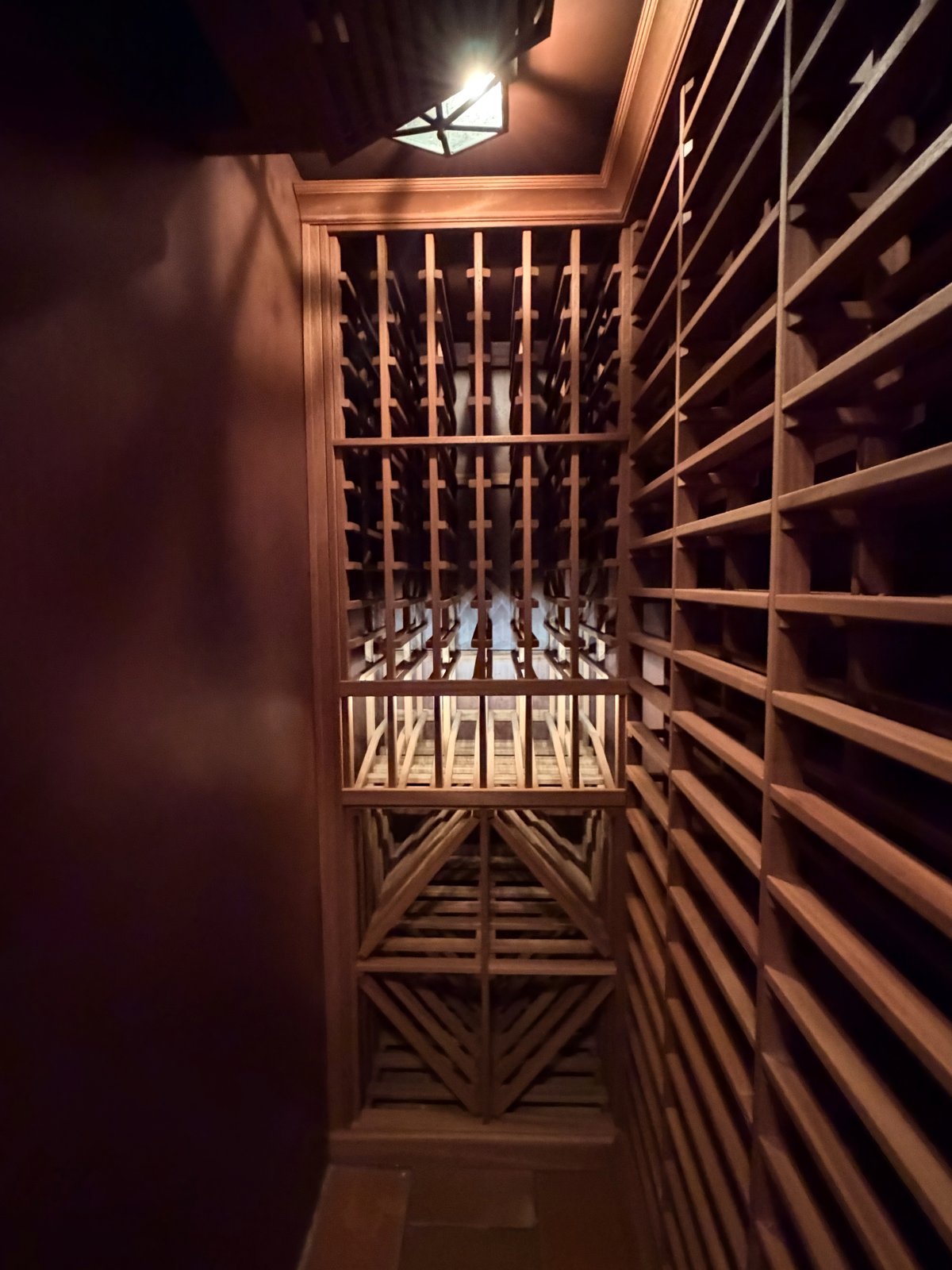
The salvage was its own quiet effort. The wet bar doors came off and went into storage to be reused rather than thrown away. A built-in hardwood wine rack sat right in an affected area, and rather than demolish it, one of our technicians spent the better part of a day taking it apart by hand, piece by piece, so it could be preserved and reinstalled. Furniture was wrapped and protected throughout.
None of that is the fast path. It is the right one.
Knowing when to stop
We monitored this home twice a day for about three weeks. By the first week of August the readings were telling a clear and consistent story. The masonry had dried or nearly dried, and the few spots still reading high had shrunk down to isolated corners and the lowest inch or two of certain walls, and they had stopped moving. We documented the trend, pulled the equipment, and closed out active drying.
Knowing when the drying is finished is as much a skill as knowing how to start it. Leave equipment running past that point and you are billing a homeowner for air. Pull it too early and you leave moisture behind the walls. The numbers tell you, if you are willing to read them patiently.
On this home the restraint mattered as much as the equipment did. The chambers, the on-and-off tests, the daily temperature checks, the wine rack taken apart by hand, all of it served one goal. Give the house back with as much of its original material intact as the building science would allow. We are just as proud of what we were able to save here as of anything we removed.